Paleo Crockpot Mississippi Pot Roast

Posted: 08/06/26
Updated: 08/25/26
This post may contain affiliate links. Please read our disclosure policy.
You might loove a traditional pot roast, but I’ll do you one better and present this Crockpot Mississippi Pot Roast that’s tangy, buttery, and fall-apart goodness (plus, it’s paleo-friendly). A simple blend of pantry seasonings, coconut aminos, pepperoncini brine, and ghee creates unbelievably flavorful beef with only 10 minutes of prep. Dinner is served!
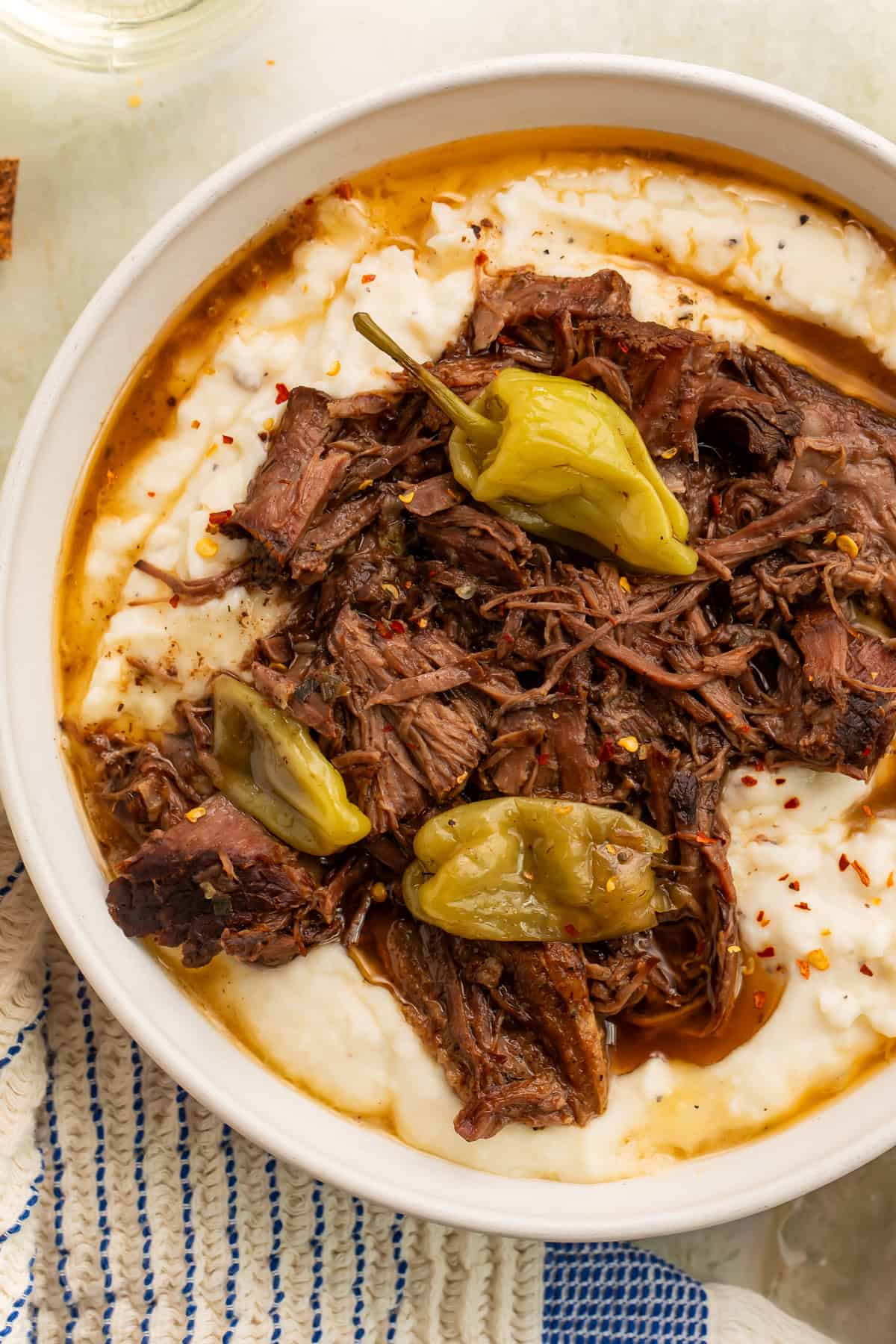
What Makes This Pot Roast Different
- The classic recipe relies on ranch and au jus mixes, but my version recreates those savory, herby flavors with individual real seasonings, giving you more control over the ingredients. And we like control over here!
- This Mississippi pot roast crockpot recipe suits SO many dietary needs. Nowadays, sensitivities and allergies are always present, so this dish is paleo-friendly, keto-friendly, and Whole30 compatible.
- You may be wondering, will this taste different than the classic? Pepperoncini and their brine supply the signature tang, while ghee gives the roast that rich, buttery finish. Nothing about this tastes like a sad substitute.
- This pot roast takes only 10 minutes to prep, and once slow-cooked (seriously, just walk away and pour that glass of wine), you can then use the meat for meal prep. The shredded meat can be used for other recipes throughout the week.
Cheryl’s Tested Notes Tips
- Don’t add extra liquid; it’s tempting, I know. The roast will release plenty of juice as it cooks. I never add more broth because it dilutes the seasonings and creates a thin, watery sauce.
- Use texture, not time, to check for doneness. I know it’s ready when a fork slides in easily and the meat shreds with almost no resistance. If it still feels tough, cook it 30 to 60 minutes on LOW or 20 to 30 minutes on HIGH, then test it again.
- Shred the beef directly in the cooking juices. Tossing the meat with the sauce keeps every bite super moist and flavorful (don’t skip this!). If the juices are thinner than you like, reduce them on the stovetop before adding back to the beef.
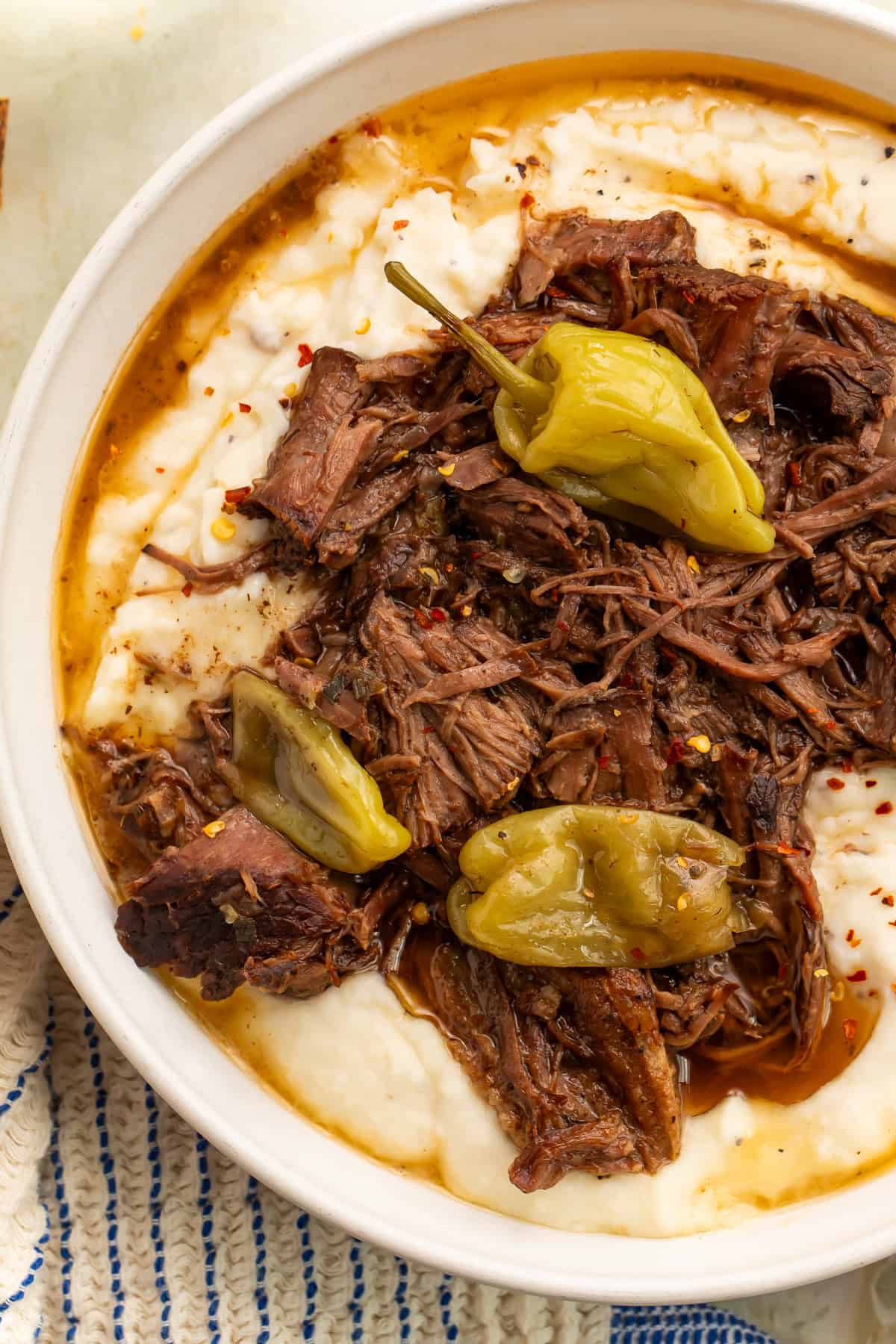
Ingredient Notes
- Chuck has enough marbling and connective tissue to become tender during slow cooking. A beef shoulder roast or brisket can work too, but I’d avoid very lean roasts.
- Pepperoncini provides that tangy flavor. This is what defines Mississippi pot roast without making it crazy spicy. Banana peppers and their brine can be substituted, although their flavor is slightly sweeter, and you may not want that.
- Keep that combo of coconut aminos, broth, and tomato paste: I don’t recommend skipping these or changing them up; this combo creates the deeply savory sauce normally supplied by an au jus packet. For gluten-free, paleo, or Whole30 diets, check the broth, tomato paste, and pepperoncini labels for non-compliant ingredients.
- Definitely ghee over butter here. Don’t get me wrong, I love butter, but ghee gives the roast that rich, buttery flavor of classic Mississippi pot roast and makes it Whole30 and paleo-friendly. For a dairy-free version, substitute an equal amount of beef tallow or refined coconut oil.
Serving Suggestions
- Paleo-friendly mashed potatoes. I prepare them with ghee and beef broth or use an unsweetened dairy-free milk instead of regular milk and butter. White potatoes are accepted by Whole30 and in paleo dishes, although stricter paleo plans may exclude them.
- Mashed cauliflower. I love this substitute for potatoes; creamy mashed cauliflower is so good. Its mild flavor lets the pepperoncini sauce shine while giving all those savory juices somewhere delicious to go.
- Roasted vegetables. I’ll do veggie sides (despite the protests of my kids), like broccoli, Brussels sprouts, asparagus, or zucchini, all of which add caramelized flavor and a lighter contrast to the rich beef.
- Lettuce wraps or cauliflower rice bowls: To stretch out the beef and make meal prep for the week, add the shredded beef to crisp lettuce leaves or cauliflower rice with avocado and fresh herbs. I adore how the fresh toppings balance the rich meat and still keep the meal paleo and keto-friendly.
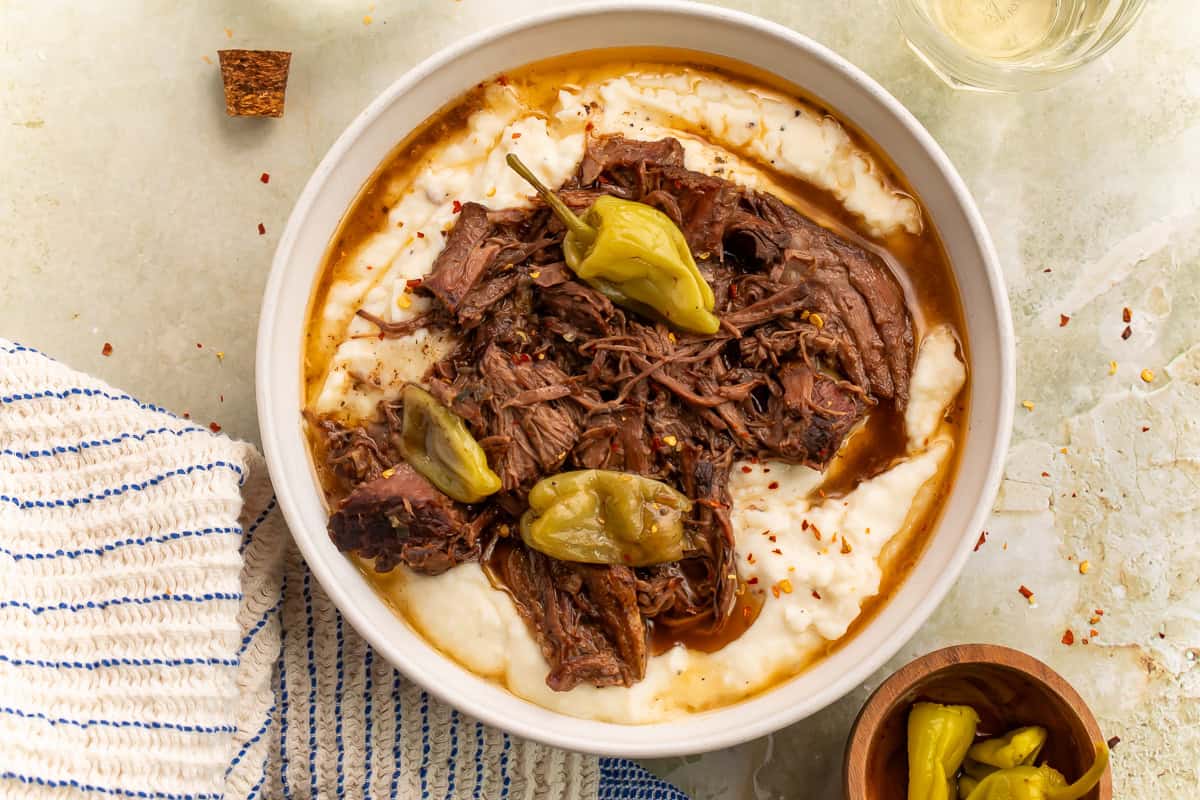
Storage & Make-Ahead
- Fridge: Refrigerate it with its cooking juices for 3 to 4 days. Keeping the beef in the liquid prevents it from drying out.
- Reheating: I warm the beef and juices gently in a covered saucepan or microwave. Add a splash of beef broth if necessary and reheat leftovers to 165°F.
- Freezing: The best way is to portion the cooled meat and juices and then freeze for up to 3 months. Thaw overnight in the refrigerator before reheating.
- Making ahead: Cook the roast completely up to 2 days before meal prep. Refrigerate it in its juices, remove any solidified excess fat (sometimes I do, or don’t depending on my preference that day), and reheat gently. I find the flavor is often richer and better the next day.
Recipe FAQs
- Does pepperoncini make Mississippi Pot Roast spicy? Not at all! Pepperoncini are pretty mild and provide more acidity than heat. The peppers and brine give the roast its signature tangy flavor without making the finished dish insanely spicy.
- Why is my Mississippi Pot Roast still tough? That usually signals it needs more cooking time. Keep cooking it until the connective tissue has broken down and the meat separates easily with a fork. Slow cooker temperatures vary, so you could try 30 to 60 minutes on LOW or 20 to 30 minutes on HIGH, and then check for doneness again.
- Can I put a frozen chuck roast in the crockpot? I would not recommend doing this! Thaw the roast completely in the fridge before placing it in the slow cooker. Frozen beef may take too long to reach a safe temperature when cooked on low.
If you loved this recipe as much as we did, don’t forget to leave us a review below. ★ Follow Easy Healthy Recipes on Pinterest, Facebook, and Instagram, too!
For more delicious recipes, visit our sister sites, 40 Aprons and Easy Cheap Recipes.
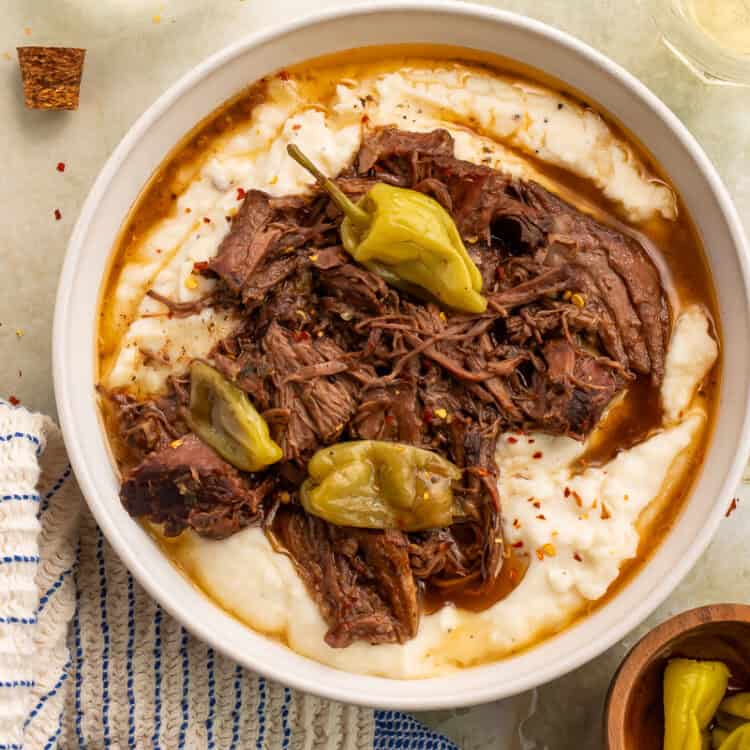
Paleo Crockpot Mississippi Pot Roast
Tangy, buttery, fall-apart chuck roast made in the slow cooker without ranch or au jus seasoning packets.

Ingredients
For the Roast
- 3 pound chuck roast
- 1½ teaspoons kosher salt
- ½ teaspoon freshly ground black pepper
For the Sauce
- ¼ cup beef broth
- 2 tablespoons coconut aminos
- 1 tablespoon tomato paste
- ¼ teaspoon dried dill
- 1 teaspoon garlic powder
- 1 teaspoon onion powder
- 1 teaspoon dried chives
- ½ teaspoon dried parsley
For the Flavoring
- 4 tablespoons ghee, divided into pats
- 8 whole pepperoncini peppers
- ¼ cup pepperoncini brine

Equipment
- 6-quart slow cooker
- Small mixing bowl
- Two forks or shredder
Instructions
- Pat the 3-pound chuck roast completely dry with paper towels. Season it evenly on all sides with 1½ teaspoons kosher salt and ½ teaspoon black pepper.
- Add ¼ cup beef broth, 2 tablespoons coconut aminos, 1 tablespoon tomato paste, ¼ teaspoon dried dill, 1 teaspoon garlic powder, 1 teaspoon onion powder, 1 teaspoon dried chives, and ½ teaspoon dried parsley to a small bowl. Whisk until well combined.
- Pour the sauce mixture into the bottom of a 6-quart slow cooker. Place the seasoned chuck roast on top of the sauce.
- Pour ¼ cup pepperoncini brine over the roast. Arrange all 8 whole pepperoncini peppers around and on top of the beef. Place all 4 tablespoons ghee, divided into pats, directly on top of the roast. Do not stir.
- Cover the slow cooker. Cook on LOW for 8 to 10 hours or HIGH for 5 to 6 hours, until the meat separates easily when pulled with two forks.
- Shred the cooked roast directly in the slow cooker. Toss the meat thoroughly with the peppers and cooking juices, then serve warm.
- For a thicker sauce, transfer the cooking juices to a small saucepan after shredding the beef. Simmer over medium-high heat for 5 to 10 minutes, or until reduced to your preferred consistency. Pour the reduced sauce back over the shredded meat and toss to combine.
Nutrition Information
Calories: 508kcal | Protein: 44g | Fat: 36g | Saturated Fat: 18g | Trans Fat: 2g | Total Carbs: 2g | Fiber: 0.4g | Sugar: 0.1g | Net Carbs: 1.6g | Vitamin C: 7mg | Cholesterol: 182mg | Sodium: 1203mg | Potassium: 799mg | Calcium: 50mg | Iron: 5mg
Number of total servings shown is approximate. Actual number of servings will depend on your preferred portion sizes.
Nutritional values shown are general guidelines and reflect information for 1 serving using the ingredients listed, not including any optional ingredients. Actual macros may vary slightly depending on specific brands and types of ingredients used.
To determine the weight of one serving, prepare the recipe as instructed. Weigh the finished recipe, then divide the weight of the finished recipe (not including the weight of the container the food is in) by the desired number of servings. Result will be the weight of one serving.
Leave a Comment