Korean Beef High Protein Meal Prep Bowls

Posted: 09/09/26
This post may contain affiliate links. Please read our disclosure policy.
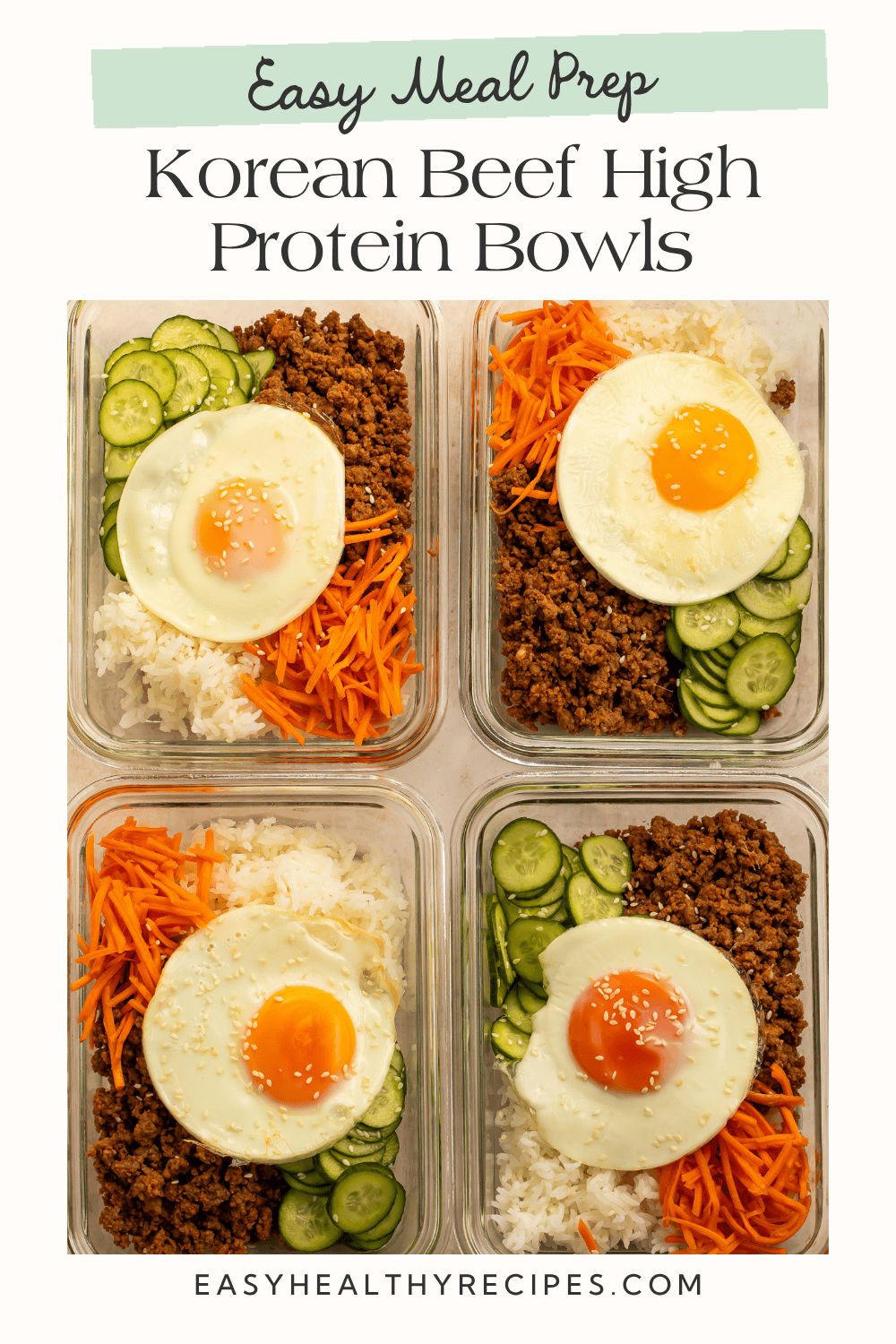
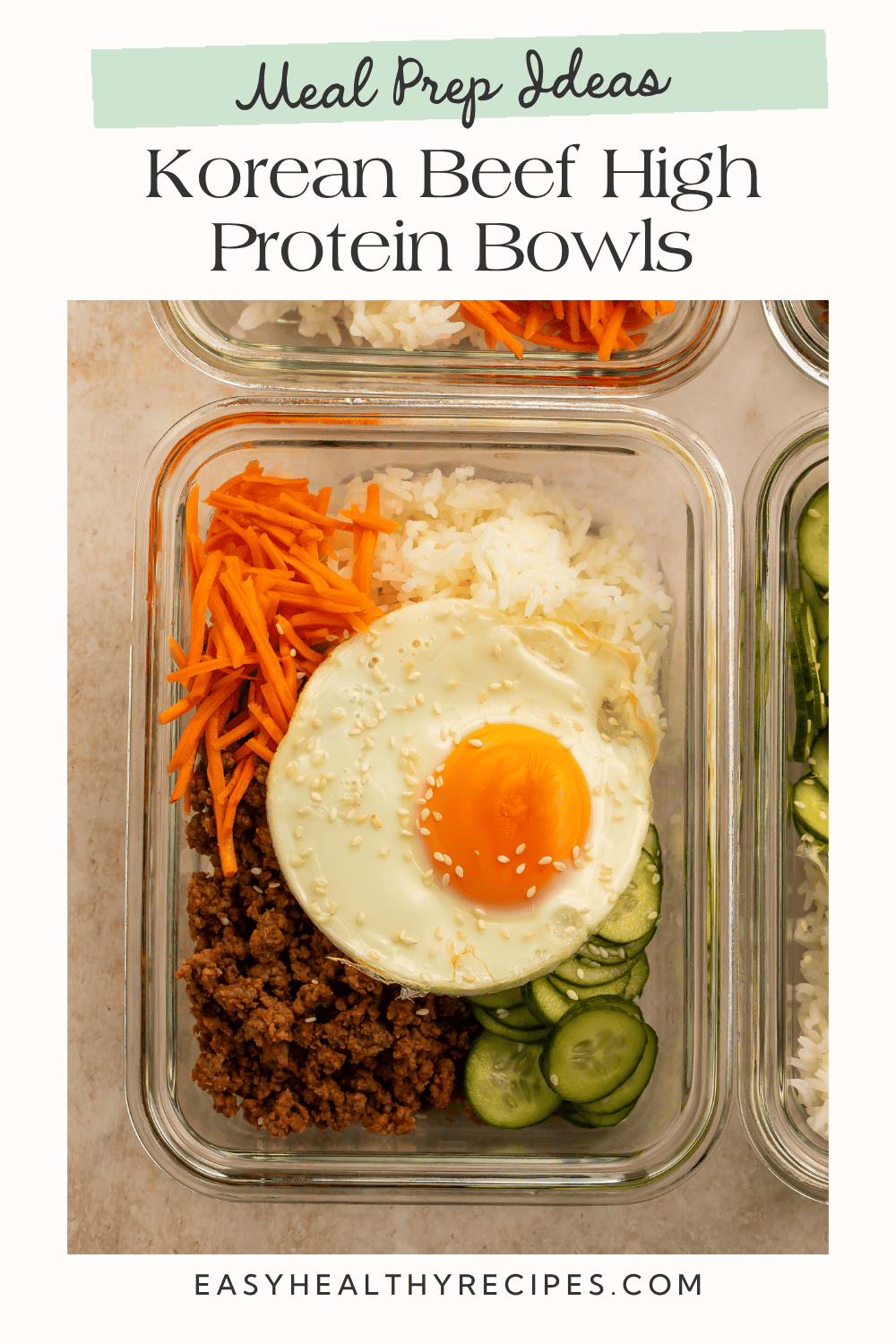
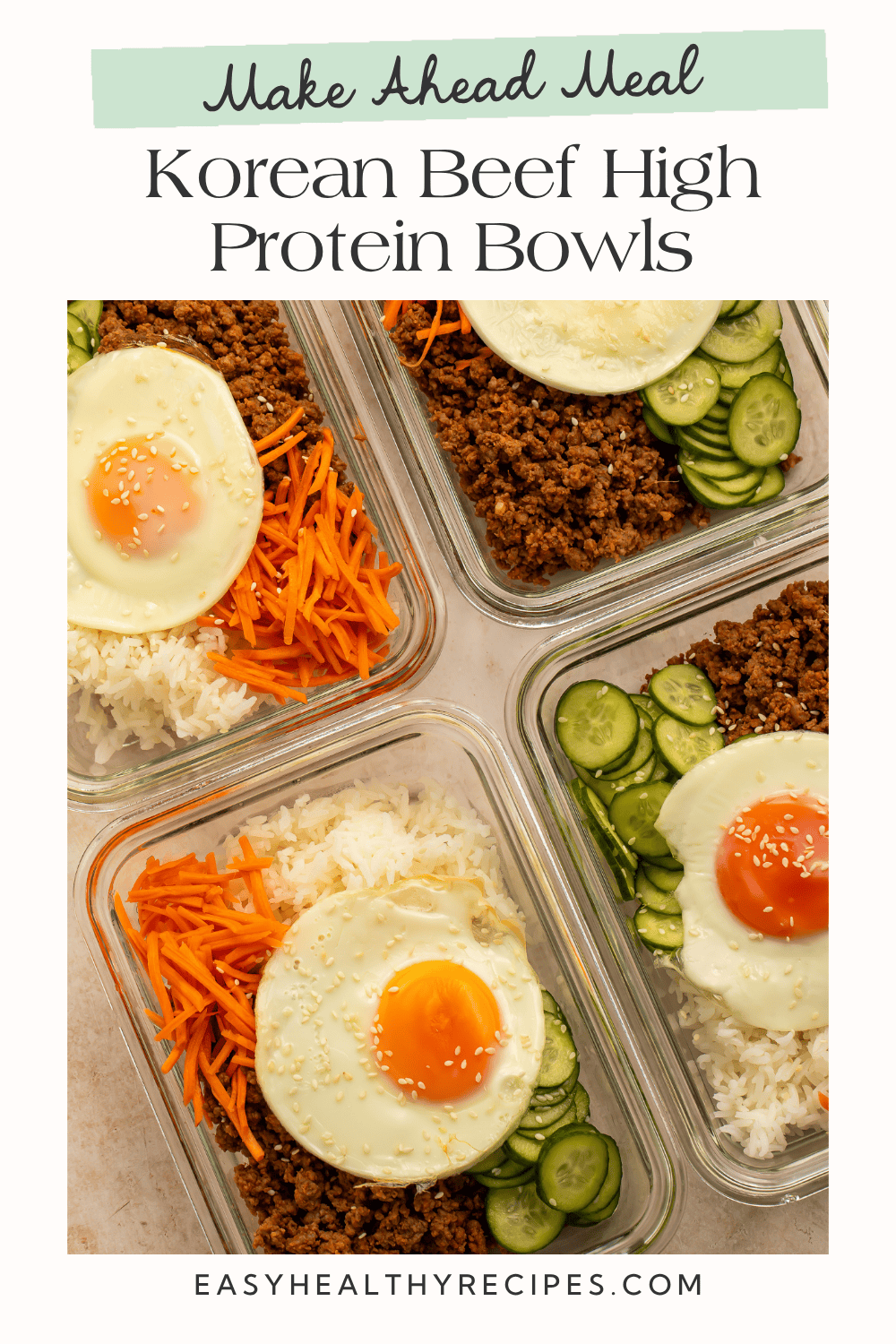
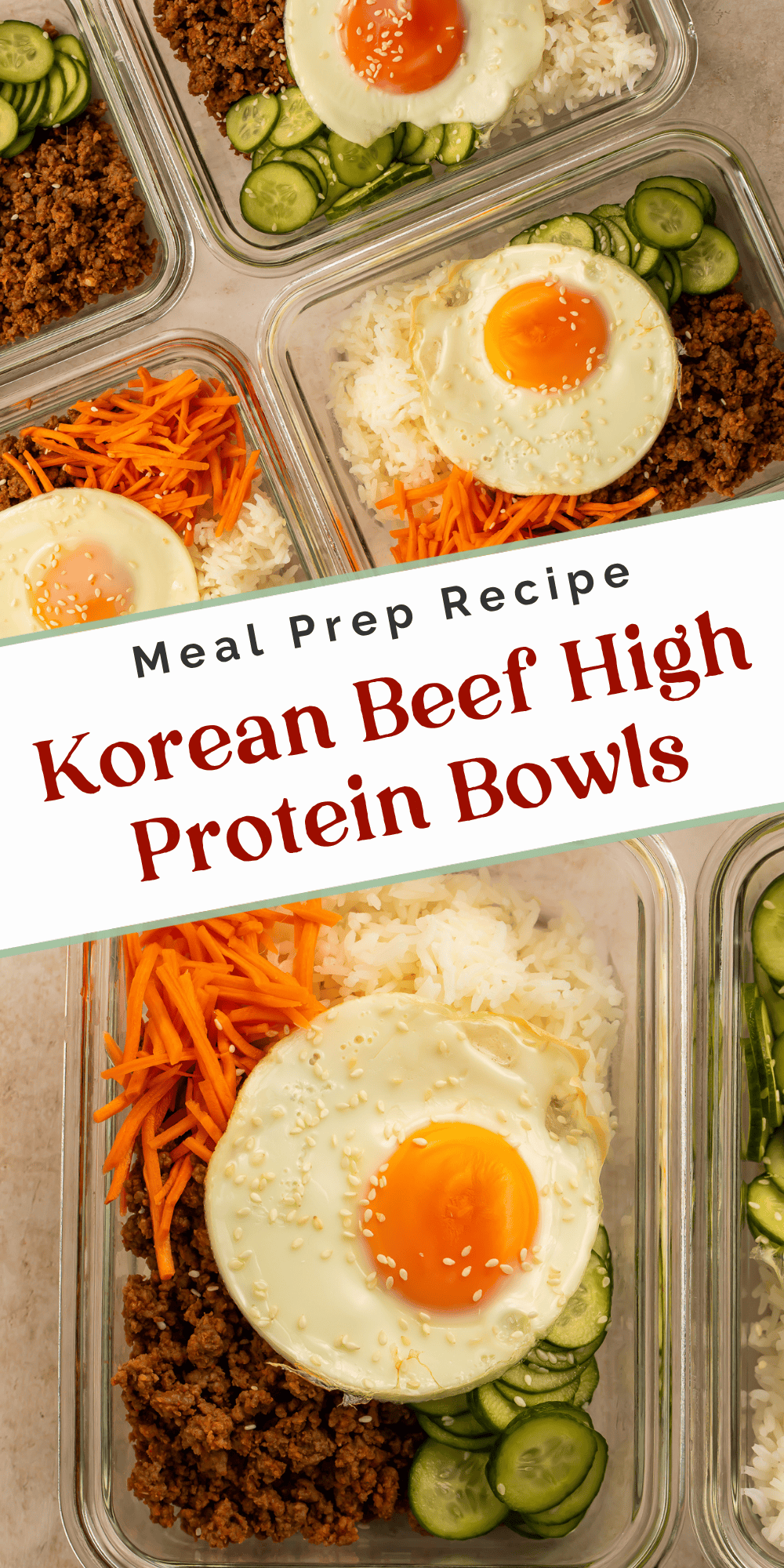
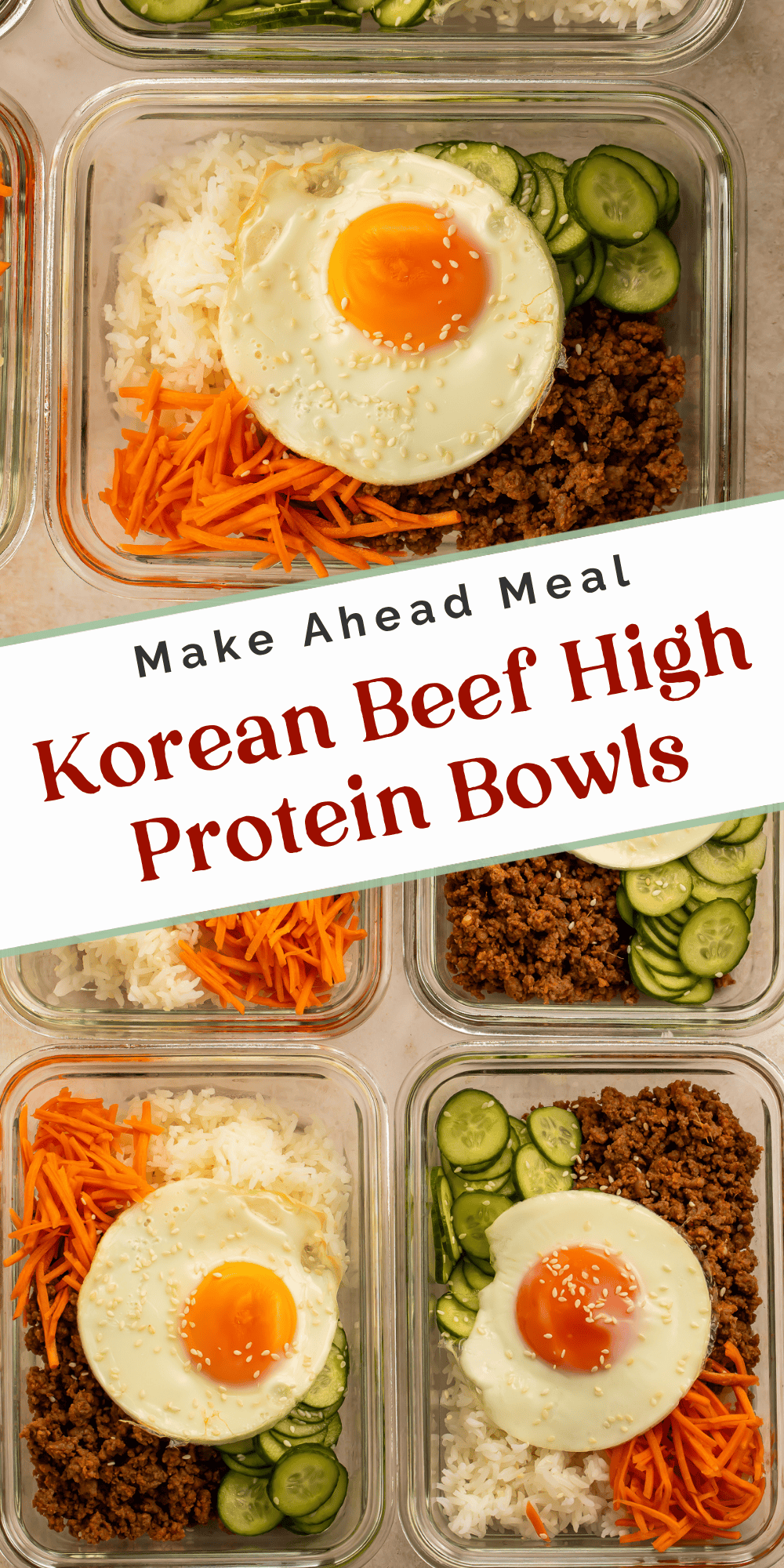
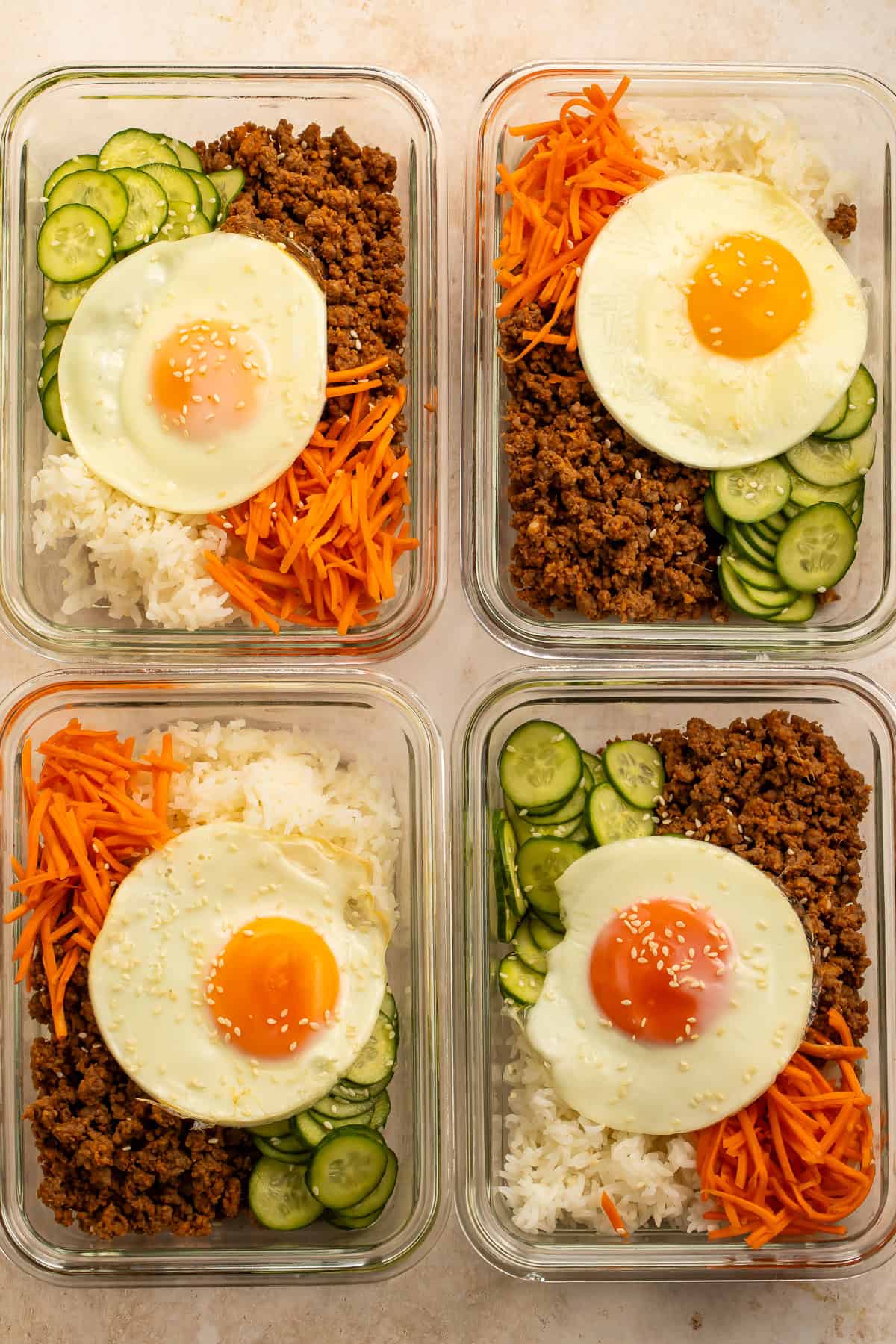
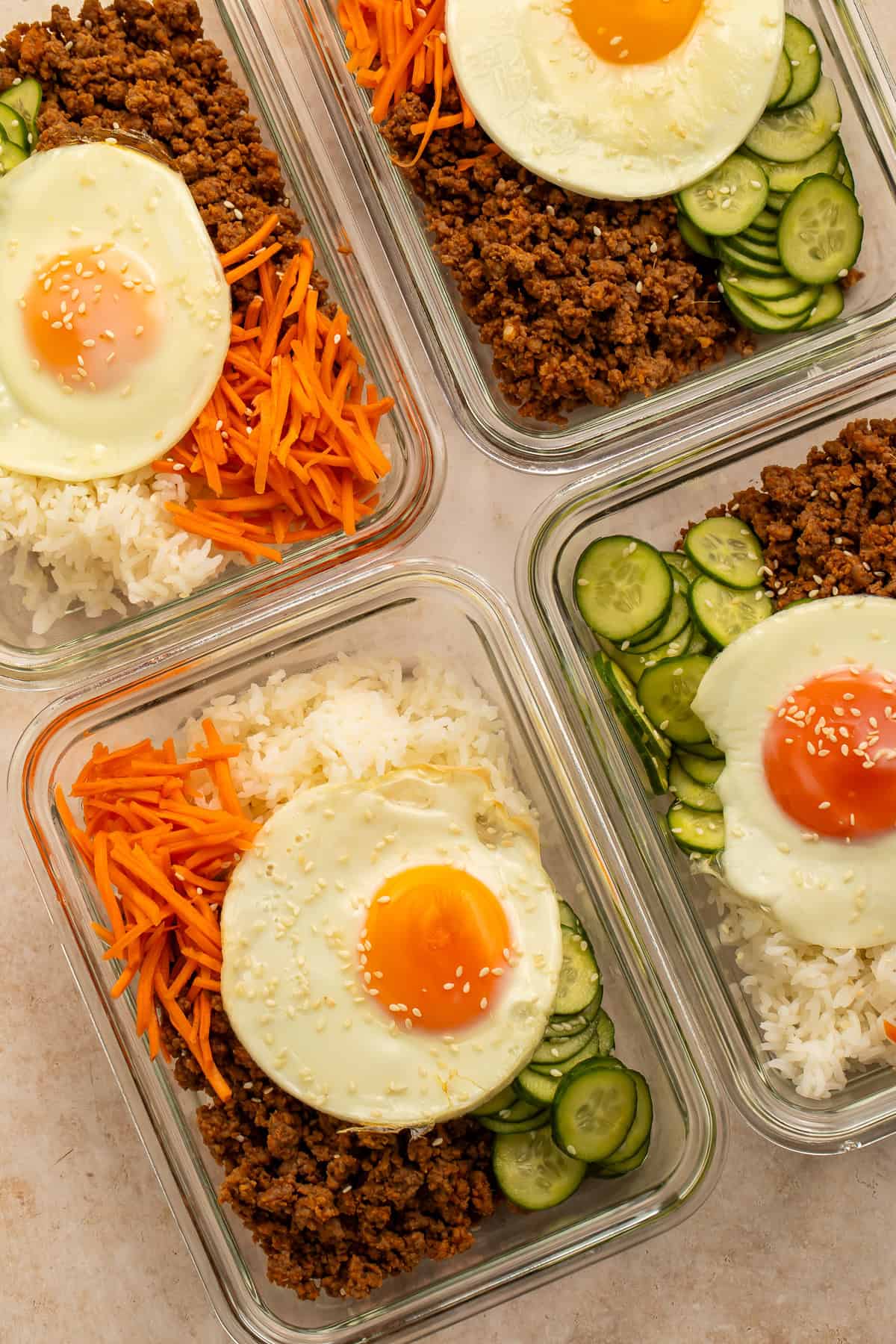
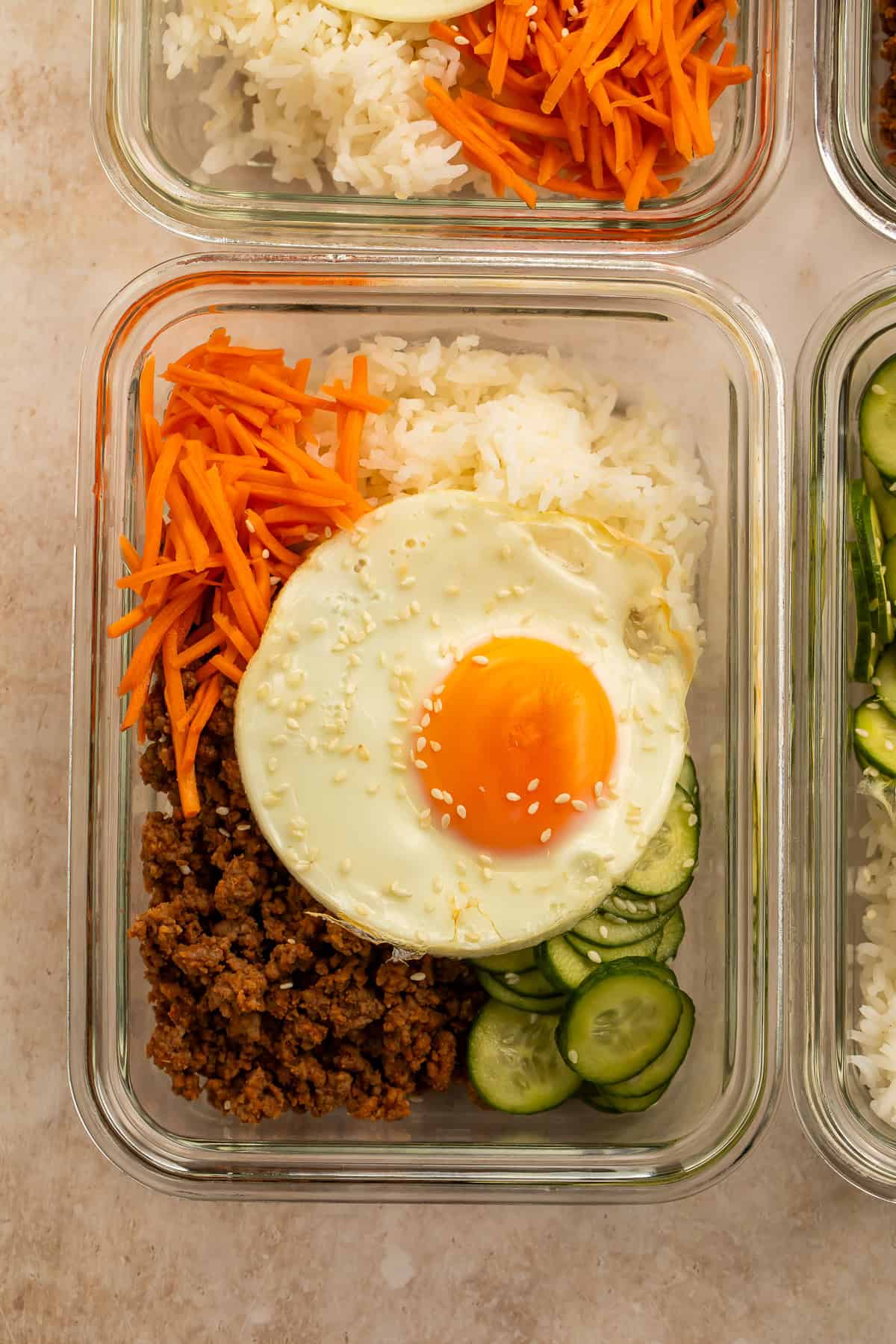
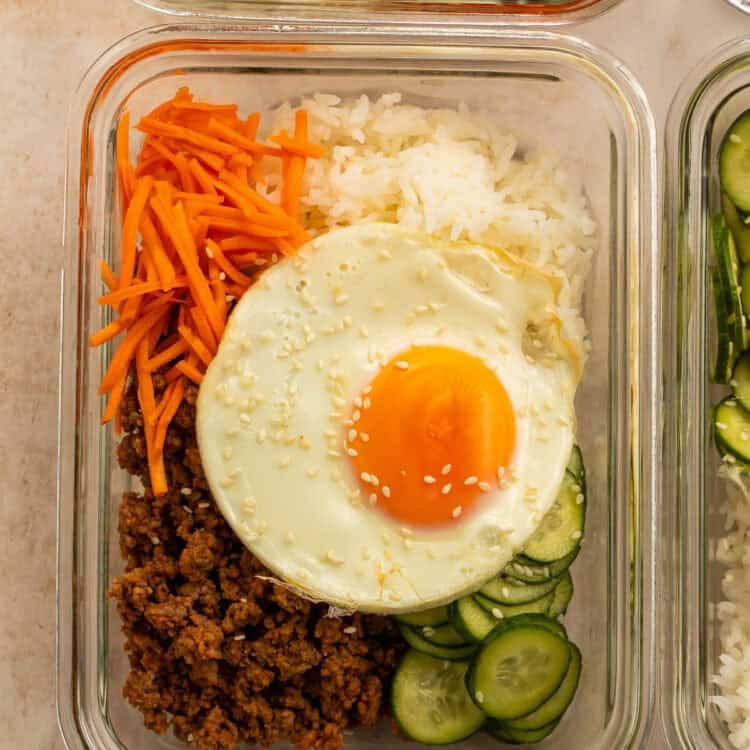
It’s no secret I looove Asian cuisine, and these meal prep bowls are Bibimbap-inspired but heavy on the protein and veg for a really good meal prep moment. Sweet-and-savory gochujang ground beef is served over fluffy jasmine rice, then I add quick-pickled carrots, sesame cucumbers, and a freshly fried egg. This has all the garlicky, gingery, deeply satisfying flavor you want!
Why This Healthy Meal Prep is Fantastic
- I made sure this meal prep is not a boring desk lunch you have to endure! Sweet-and-spicy beef, tangy carrots, cool cucumbers, and a freshly fried egg give so many contrasting flavors and textures!
- This is SO ridiculously easy! The ground beef cooks in one skillet, the vegetables need only a quick toss or soak, and there’s no fussy marinade to plan around.
- The “healthy” part of this site means I make sure each bowl has the right amount of protein and carbs. The beef and egg total about 47 grams of protein, while the rice and veggies provide carbs and fiber (approximately 100 grams of carbohydrates and 4 grams of fiber).
- I like the classic idea of meal prep, but also enjoy changing it up food-wise. So, you can swap in other toppings over the week, like kimchi, steamed broccoli, shredded cabbage, edamame, or spicy mayo.
Cheryl’s Tested Notes & Tips
- Cook the eggs low and slow. For those perfectly runny yolks, use low heat. Higher heat will give you lacey edges. We sometimes use an egg cooker to speed it up (like here!).
- Drain only the excess grease. Leaving a little behind helps the sauce cling to the beef and keeps it from drying out when you reheat later on.
- Let that beef brown! Don’t stir constantly, as that mostly steams it. Let the beef sit, brown, then break it up a bit.
- With great gochujang comes great responsibility. 2 tablespoons gives the beef a noticeable kick, but you can start with 1 tablespoon for a milder bowl.
Ingredient Notes
- For ground beef, an 85/15 blend stays juicy. Especially important for reheating. Ground pork also works and is another flavorful, very Asian inspired protein.
- Check the label of your gochujang: If gluten is a concern, review the label, because some brands contain wheat.
- Savory soy forms the sauce base. But if you want to sub, use tamari or gluten-free soy sauce if there’s an allergy involved; I wouldn’t use coconut aminos because they’re too sweet.
- Jasmine rice is an Asian classic. Regular long-grain white rice or brown jasmine rice are awesome options, too. If you’re trying to go lower carb, you could use cauliflower rice here.
- Have some fun with pickled veggies. You can stick to the cucumber and carrots, but try pickled radishes, daikon, red onion, or shredded cabbage. Use the same brine recipe and be sure to soak for at least 15–30 minutes.
How to Pack These Meal Prep Bowls
- My fave meal prep containers are the Ello Everyday glass containers. They hold up to 3 cups per container, so there’s enough room to hold everything.
- Divide the rice and Korean beef evenly among four containers. Let the excess steam escape for a few minutes before adding the lids so condensation doesn’t make the rice soggy.
- Despite my pretty photos, pack the pickled carrots and cucumbers separately, so they stay cold and crunchy. Keep the pickled carrots in their liquid until you’re ready to serve.
- The egg should always be fried fresh—a meal-prepped fried egg is a sad, rubbery thing if left in the fridge!
If you want to know why I love the Ello Everyday containers, check out my full review of them!
Storage Instructions & Reheating
- Refrigerator: Store the meal prep bowls for up to 4 days. I always label them with the preparation date so there’s no confusion later.
- Freezer: If you’re making frozen make-ahead meals, freeze the beef and rice in your portioned containers for up to 3 months.
- Reheating: The beef reheats beautifully, and the sauce only gets better as it sits. Reheat 1 portion of rice and beef until piping hot. Heat ½ teaspoon avocado oil in a skillet and fry 1 egg to your preferred doneness (or use an egg cooker if making multiple portions). Add the cold carrots and cucumbers, and then top with the freshly fried egg.
Recipe FAQs
- Is Korean ground beef the same as bulgogi? Not really. Authentic bulgogi is made with thinly sliced marinated beef. This ground beef version borrows the same flavor profile but uses a quicker, meal-prep-friendly method.
- Can I reheat the carrots and cucumbers with the bowl? You can, but I really wouldn’t. They’re best added fresh and stored separately before serving.
- What can I use instead of gochujang? I get it, maybe you just don’t like gochujang. In that case, mix 1 tablespoon sriracha with 1 tablespoon white or yellow miso. It won’t taste exactly the same, but it provides a nice heat and savory depth.
If you loved this recipe as much as we did, don’t forget to leave us a review below. ★ Follow Easy Healthy Recipes on Pinterest, Facebook, and Instagram, too!
For more delicious recipes, visit our sister sites, 40 Aprons and Easy Cheap Recipes.
Korean Beef High Protein Meal Prep Bowls
Sweet, savory, and just spicy enough, these bulgogi-inspired ground beef meal prep bowls come with jasmine rice, quick-pickled carrots, sesame cucumbers, and a freshly fried egg.

Ingredients
For the Beef
- 1½ pounds 85/15 ground beef
- ¼ cup soy sauce
- 2 tablespoons packed brown sugar
- 2 tablespoons gochujang
- 1 tablespoon sesame oil
- 4 cloves garlic, minced
- 1 tablespoon fresh ginger, grated
- 1 tablespoon rice vinegar
For the Rice
- 2 cups uncooked jasmine rice
- 1 pinch salt
- Water as directed on the rice package
For the Quick-Pickled Carrots
- 2 cups julienned or shredded carrots
- ½ cup rice vinegar
- 2 tablespoons granulated sugar
- ½ teaspoon salt
For the Sesame Cucumbers
- 2 persian cucumbers, thinly sliced
- 1 tablespoon rice vinegar
- 1 teaspoon sesame oil
- 1 teaspoon sesame seeds
- 1 pinch salt
To Finish
- 4 large eggs
- 2 scallions, thinly sliced
- 1 tablespoon sesame seeds

Equipment
- medium saucepan or rice cooker
- Large skillet microwave-safe bowl
- Mixing bowl
- Spatula
- egg cooker optional, if you prefer to use
Instructions
Make the Rice
- Rinse 2 cups jasmine rice if desired, then cook it with 1 pinch salt and the amount of water directed on the package. When tender, fluff the rice and let it cool slightly.
Make the Pickled Vegetables
- Pace 2 cups carrots in a heat-safe bowl or jar. Combine ½ cup rice vinegar, 2 tablespoons granulated sugar, and ½ teaspoon salt in a small saucepan or microwave-safe bowl. Warm just until the sugar dissolves, then pour the mixture over the carrots. Let them sit for at least 15 minutes. Store the carrots in their pickling liquid.
- In a bowl, toss 2 sliced Persian cucumbers with 1 tablespoon rice vinegar, 1 teaspoon sesame oil, 1 teaspoon sesame seeds, and 1 pinch salt. Let sit for 10 minutes, then drain off the excess liquid before packing.
Prepare the Beef
- Heat a large skillet over medium-high heat. Add 1½ pounds ground beef and cook, breaking it into small pieces, until browned and cooked through, about 6-7 minutes. Drain off excess fat if needed.
- Add ¼ cup soy sauce, 2 tablespoons brown sugar, 2 tablespoons gochujang, 1 tablespoon sesame oil, 4 minced garlic cloves, 1 tablespoon grated ginger, and 1 teaspoon rice vinegar. Stir well and cook for 3 to 4 minutes, until the sauce thickens slightly and coats the beef.
Assemble the Bowls
- Divide the cooked rice and sauced beef among 4 meal-prep containers. Add the drained pickled carrots and sesame cucumbers to separate compartments or containers. Divide 2 sliced scallions and 1 tablespoon sesame seeds among the bowls.
Notes
For runny yolks: use low heat. Higher heat will give you lacey edges. Or use an egg cooker to speed it up (like here!).
For ground beef: Buy an 85/15 blend, as it stays juicy. Especially important for reheating.
Nutrition Information
Calories: 929kcal | Protein: 47g | Fat: 36g | Saturated Fat: 12g | Trans Fat: 2g | Total Carbs: 99g | Fiber: 4g | Sugar: 17g | Net Carbs: 95g | Vitamin C: 8mg | Cholesterol: 279mg | Sodium: 1341mg | Potassium: 1032mg | Calcium: 148mg | Iron: 6mg
Number of total servings shown is approximate. Actual number of servings will depend on your preferred portion sizes.
Nutritional values shown are general guidelines and reflect information for 1 serving using the ingredients listed, not including any optional ingredients. Actual macros may vary slightly depending on specific brands and types of ingredients used.
To determine the weight of one serving, prepare the recipe as instructed. Weigh the finished recipe, then divide the weight of the finished recipe (not including the weight of the container the food is in) by the desired number of servings. Result will be the weight of one serving.
Leave a Comment