Takeout-Style Tofu Pad Thai

Posted: 11/24/26
This post may contain affiliate links. Please read our disclosure policy.
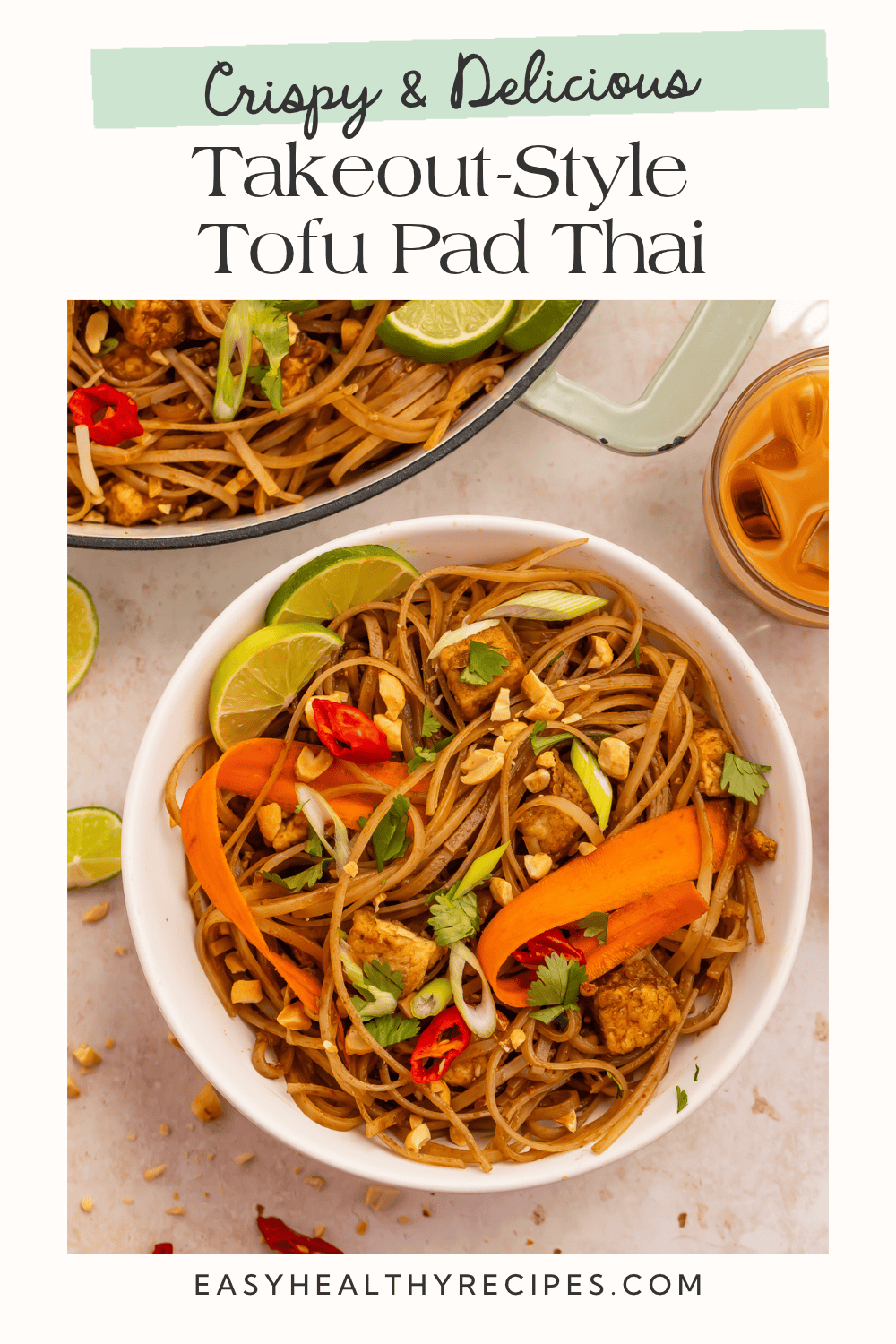
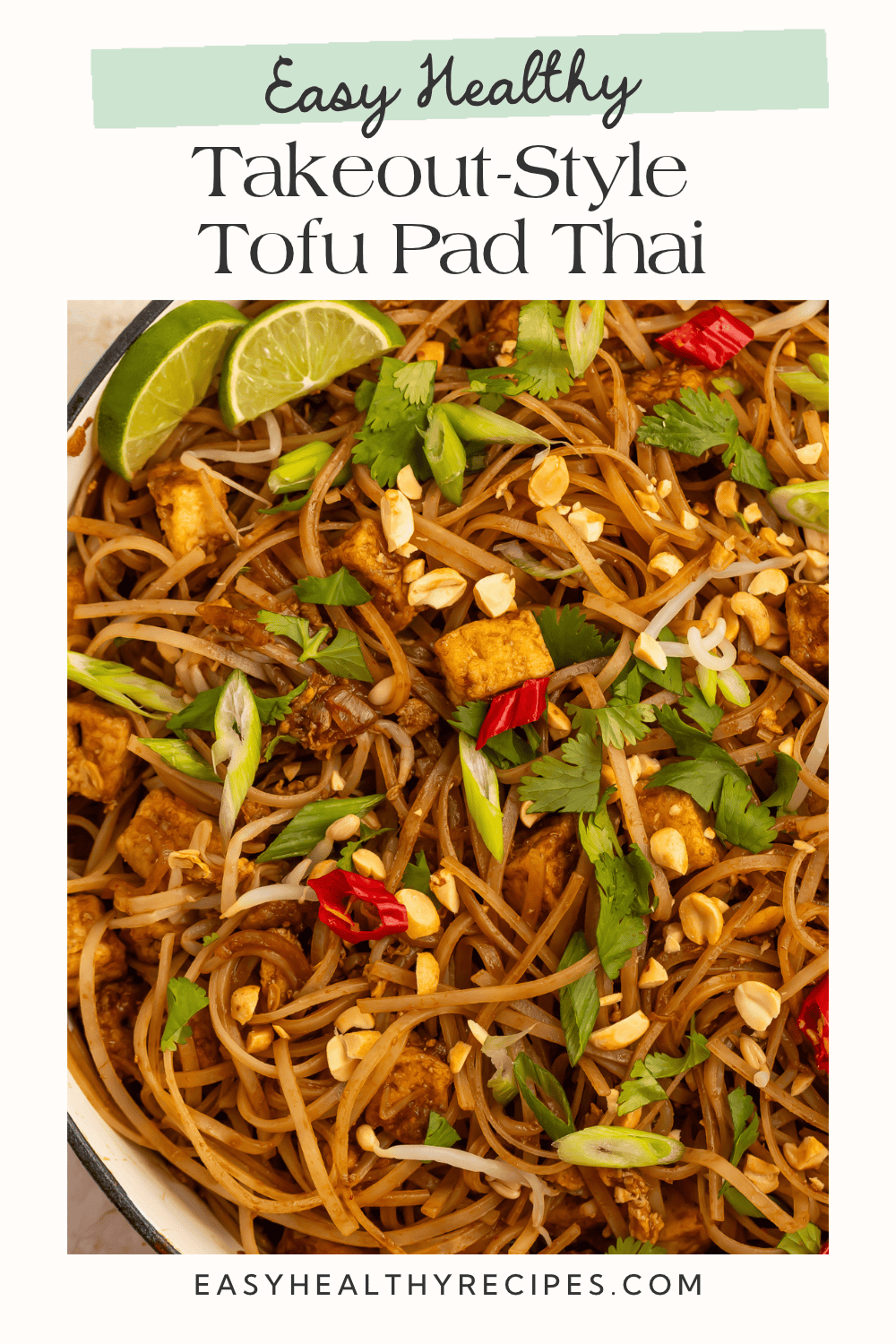
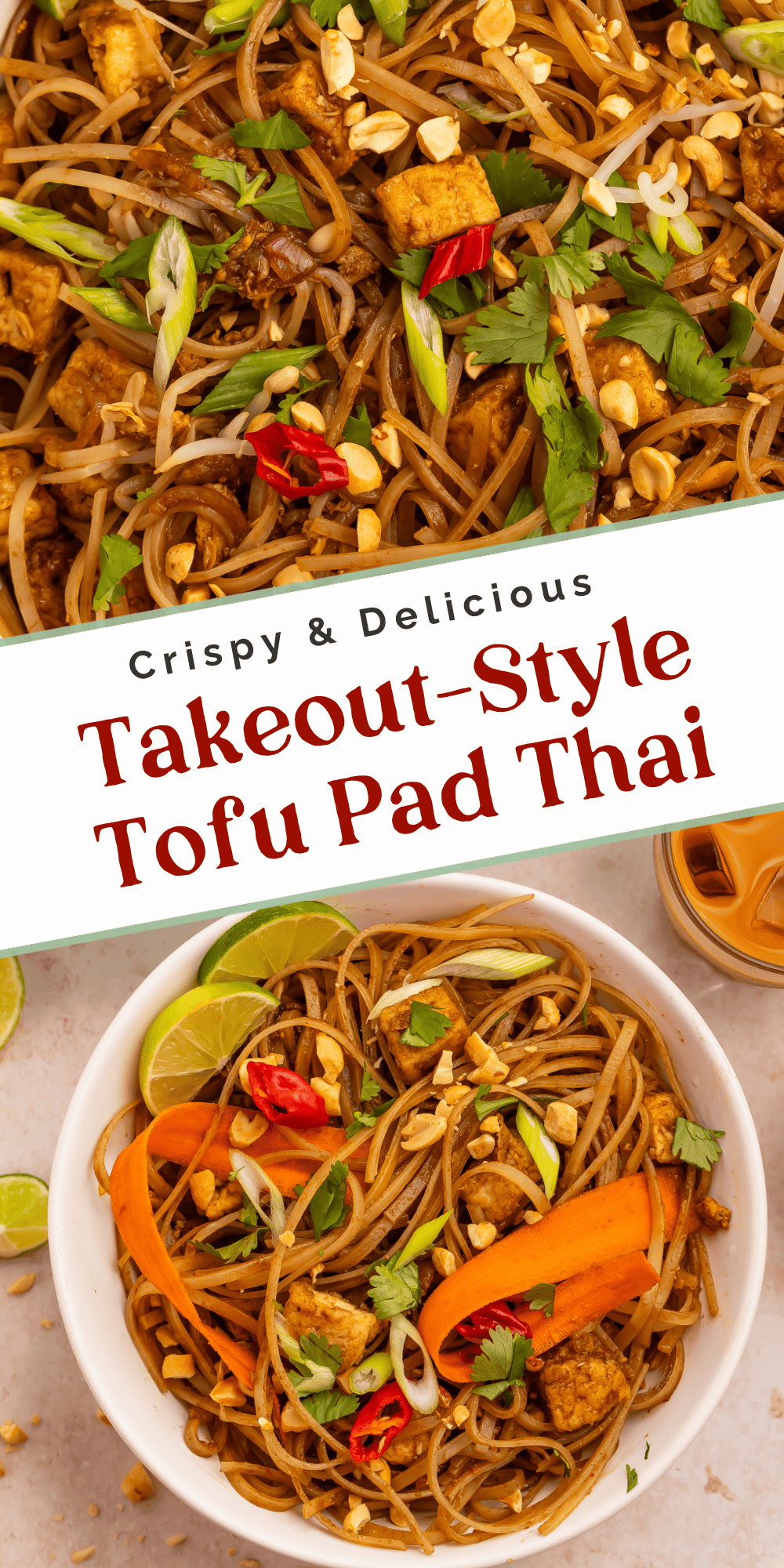
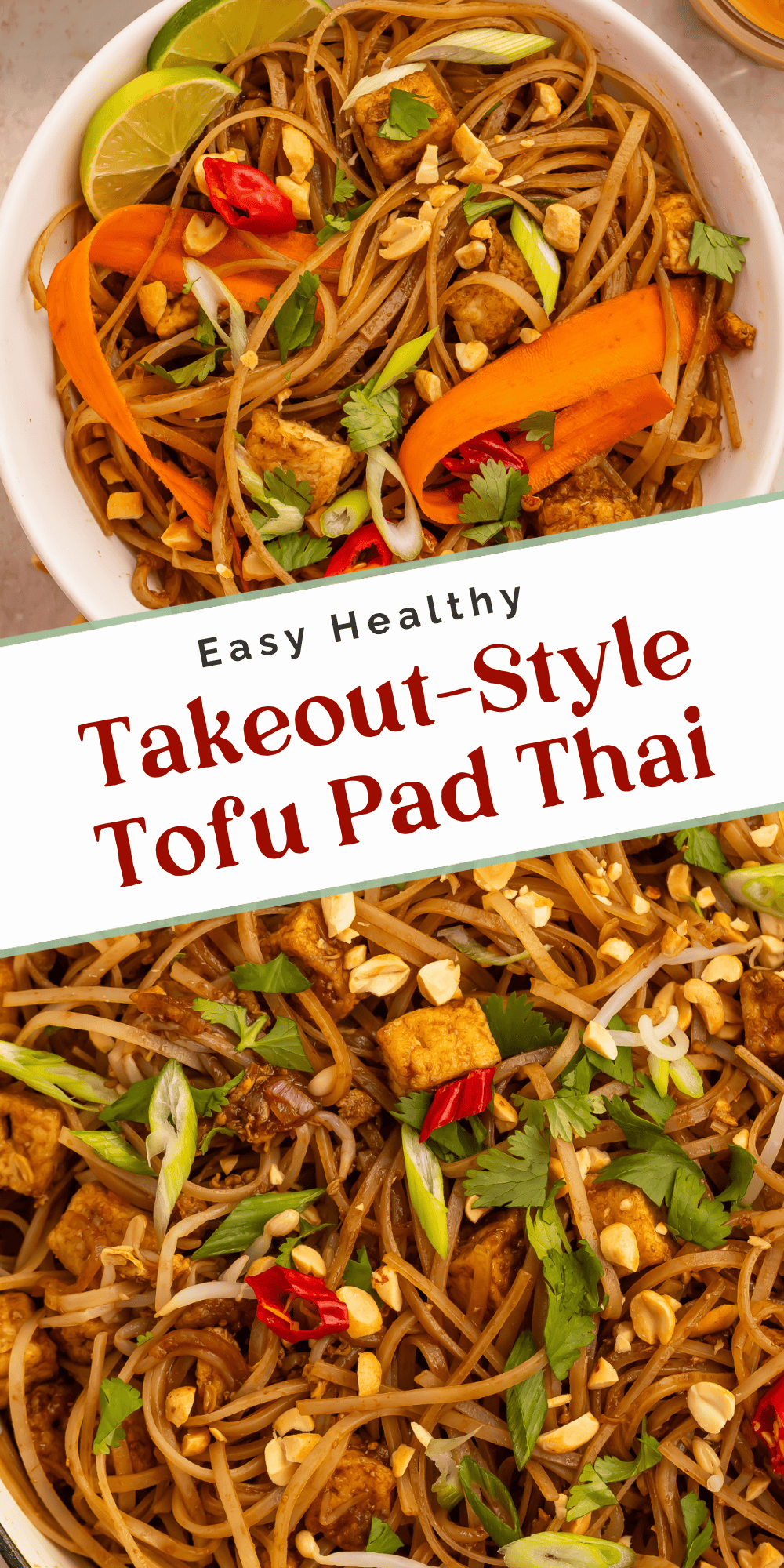
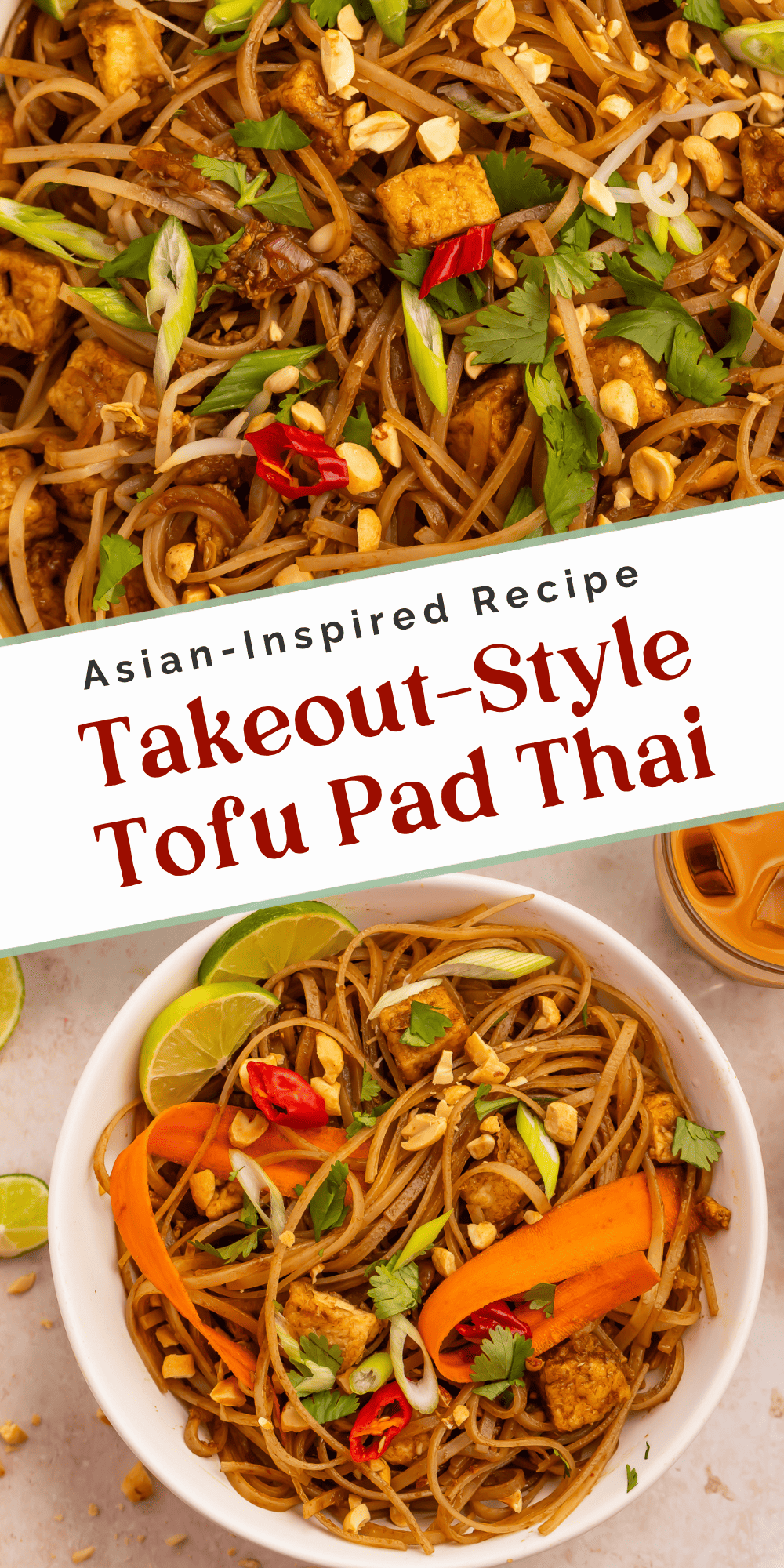
Sticky, tangy, and saucy, this tofu pad thai recipe has everything I love about takeout. Crispy, golden tofu, chewy rice noodles, and a tangy-sweet tamarind sauce are ready in only 40 minutes. It’s a yummy take on the classic that I make again and again!
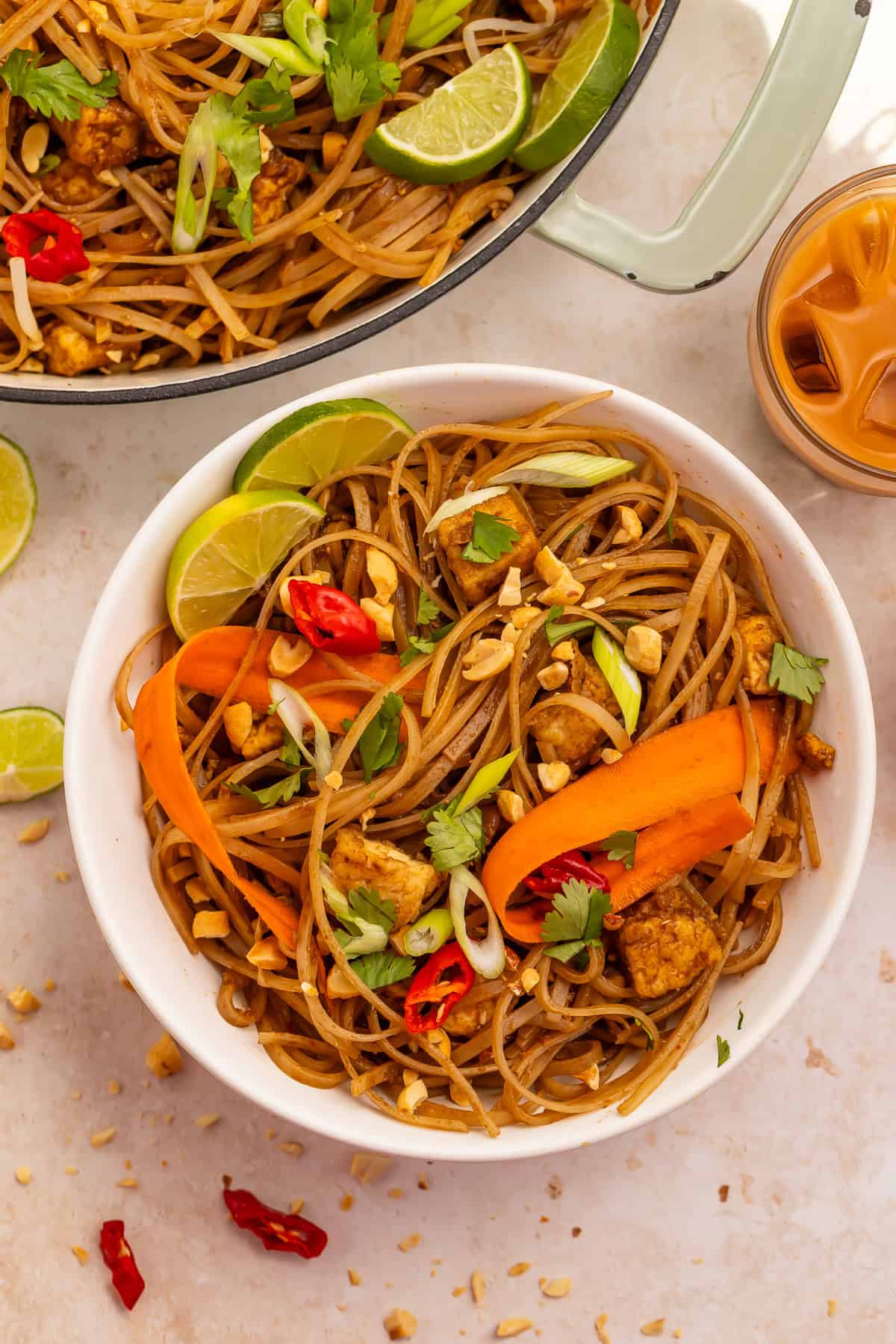
What This Pad Thai With Tofu Is Dinner-Worthy
- A takeout-style sauce with a yummy twist. Tamarind and fish sauce are classic pad thai flavors, while brown sugar and sriracha are fresh additions that bring sweetness and heat. It’s saucier than most homemade versions, so every noodle comes out glossy and coated.
- No soggy tofu allowed. The to-die-for crispy tofu comes from the cornstarch coating, which means it stays crunchy through and through.
- Make it your own. You can add different veggies to switch it up, but try to use quick-cooking options like shredded cabbage, snow peas, or baby bok choy.
- One skillet means less stress and minor cleanup. This takes 20 minutes to prep and 20 minutes to cook- that’s all! Leaving out the meat makes this dish easy to execute; add it to your midday meal plan when you run out of steam to cook something more complicated.
Do you love tofu?
My vegetarian take on the classic Cantonese salt and pepper pork is this delicious salt and pepper tofu recipe. It tastes amazing with a steaming serving of Jasmine rice!
Cheryl’s Tested Notes & Tips
- Do this for perfect noodles. Soak the noodles in hot tap water (not boiling) for 20-25 minutes, until they’re bendy but still firm in the center. This pad thai is quite saucy, so don’t skip that step. Boiled noodles become gummy and won’t take on the sauce at all.
- Don’t overcrowd the tofu. Sear it in a single layer, turning every couple of minutes until it’s golden on all sides.
- If noodles are still firm, do this. Just splash in a bit of water and keep tossing them around until they’re tender and glossy.
Useful Ingredient Notes
Tamarind concentrate – That’s what gives tofu pad thai its distinctive tangy, slightly fruity kick. You want the thick, dark, pourable concentrate (it’ll be near the Asian ingredients), not a hard block of pulp.
Fish sauce – Brings that salty, savory oomph you just can’t fake with plain old salt. If you’re going fully vegetarian, just swap in soy sauce. For vegans, skip the eggs, or do what I do and toss in some extra tofu.
Flat rice noodles (¼-inch wide) – Good news: these are naturally gluten-free, and the quarter-inch size gives you a chewy bite that soaks up all the sauce.
Extra-firm tofu – Give it a good press for 15 minutes to get rid of the extra water, so it actually crisps up instead of just sadly steaming. A quick toss in cornstarch is my trick for that golden, crunchy outside.
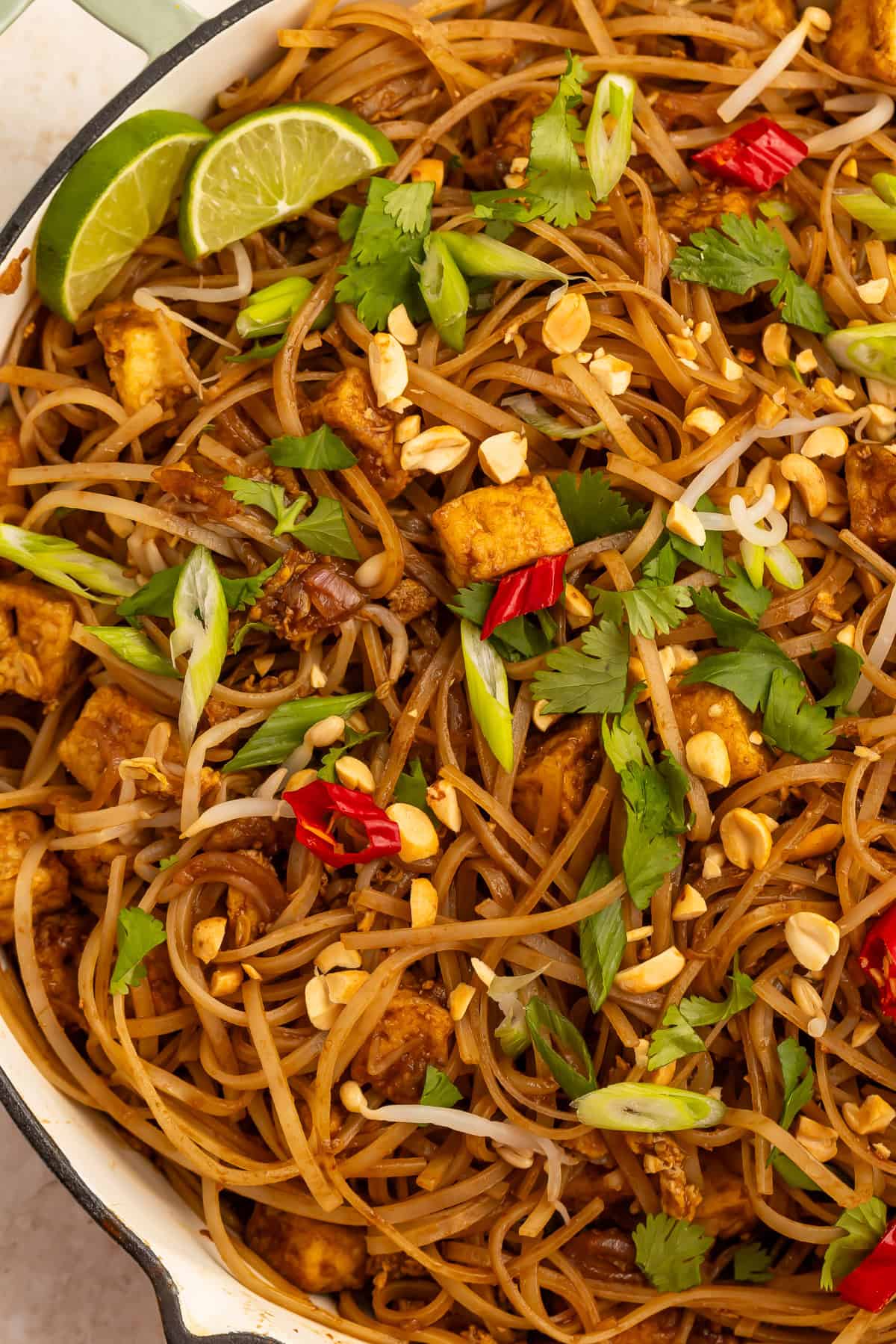
Other Thai Recipes I Love
Thai food is one of my true faves; I eat it so frequently that it’s become one of the cuisines I enjoy as a recipe developer. Here are a few of my go-tos that readers adore too!
- Slow Cooker Tom Kha Soup (Thai Coconut Chicken Soup): Light, yet filling and full of tangy flavor, it’s the best tom kha gai recipe I’ve ever made or tried and is so creamy, easy, and delicious.
- Tom Kha Goong (Thai Coconut Shrimp Soup): A seafood-based version of classic Tom Kha Gai, it’s full of rich, tangy flavors from galangal to lemongrass, jalapeño to red chilies, coconut to lime.
- Thai Peanut Chicken: I’ve been making this Thai chicken satay-inspired recipe for 15 years! Tender chicken marinates in a rich, creamy peanut sauce, then is broiled or grilled to perfection.
Storage, Reheating, & Make-Ahead
- Refrigerator: Pad thai is best eaten right away, but leftovers keep in an airtight container in the fridge for up to 3 days.
- Reheating: I warm it in a skillet over medium heat. Add a splash of water until it’s heated through, and serve!
- Prep ahead (totally optional): If you want a faster night, whisk the sauce and press and cube the tofu ahead of time, and keep both in the fridge. Soak the noodles right before cooking so they don’t get mushy.
Little note about freezing: I don’t recommend freezing this, because the noodles turn soft and the tofu will lose its crisp.
Recipe FAQs
What noodles should I use for pad thai?
The best kind is flat rice noodles, about ¼-inch wide. I’d skip thin rice vermicelli because it breaks apart insanely easily and becomes too sticky when stir-fried.
How do I fix pad thai sauce that’s too sweet, sour, or salty?
Always taste it and adjust. A good rule of thumb is to add more tamarind for sour, more sugar for sweeter, or a splash more fish sauce for saltier.
How many calories are in tofu pad thai?
This version has 764 calories based on 4 servings, with protein coming from the eggs and tofu at 24 grams. Feel free to add more veggies, like bok choy or snap peas.
These tasty Asian noodle recipes are just as easy to make:
If you loved this recipe as much as we did, don’t forget to leave us a review below. ★ Follow Easy Healthy Recipes on Pinterest, Facebook, and Instagram, too!
For more delicious recipes, visit our sister sites, 40 Aprons and Easy Cheap Recipes.
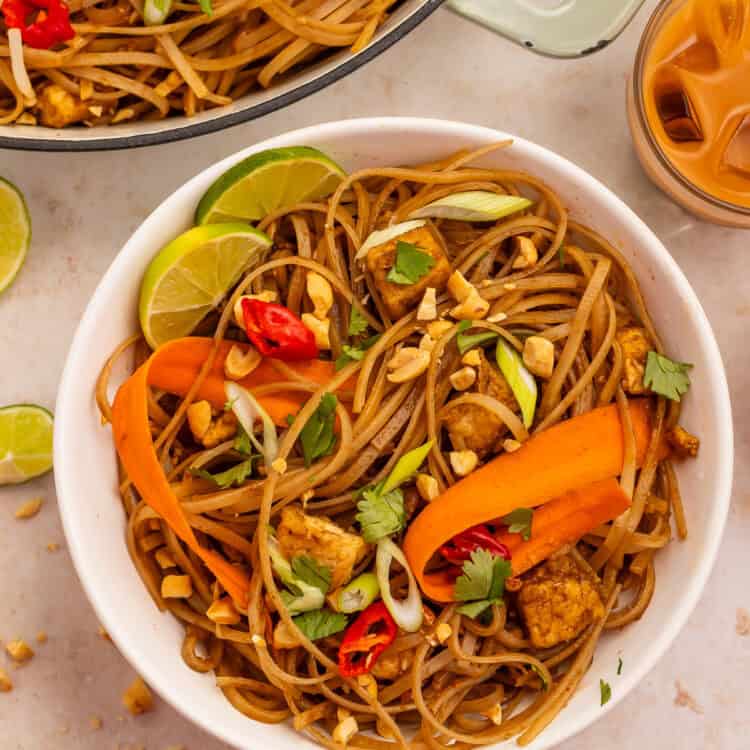
Takeout-Style Tofu Pad Thai
This crispy tofu pad thai has everything I love about takeout but with real ingredients. Golden tofu, chewy rice noodles, and a tangy-sweet tamarind sauce come together quickly. My family loves this recipe!

Ingredients
- 14 ounces extra-firm tofu (1 block) pressed for 15 minutes and cut into ¾-inch cubes
- 2 tablespoons cornstarch
- 3 tablespoons neutral oil such as avocado or canola
- ¼ teaspoon salt
- ¼ cup tamarind concentrate
- ¼ cup fish sauce use soy sauce for vegetarian
- ⅓ cup packed brown sugar
- 2 tablespoons soy sauce
- 1 tablespoon rice vinegar
- 2 teaspoons sriracha plus more to taste
- ½ cup water
- 8 ounces flat rice noodles ¼-inch wide
- 3 tablespoons neutral oil divided
- 2 shallots thinly sliced
- 4 garlic cloves minced
- 3 large eggs lightly beaten
- 3 cups bean sprouts divided
- 4 scallions sliced, whites and greens separated
For Serving (Optional)
- ½ cup roasted peanuts roughly chopped
- 2 limes cut into wedges
- fresh cilantro chopped to taste
- extra bean sprouts to taste
- red pepper flakes or sriracha to taste

Equipment
- large nonstick skillet or wok
- Large bowl
- medium bowl
- whisk
- Tongs
- Colander
- Paper towels
Instructions
- Place 8 ounces flat rice noodles in a large bowl and cover with hot tap water, not boiling. Soak 20 to 25 minutes, until pliable but still firm in center. Noodles finish cooking in the pan. Drain well.
- While noodles soak, whisk ¼ cup tamarind concentrate, ¼ cup fish sauce, ⅓ cup packed brown sugar, 2 tablespoons soy sauce, 1 tablespoon rice vinegar, 2 teaspoons sriracha, and ½ cup water until sugar dissolves. Taste; sauce should be tangy, sweet, and salty. Noodles will mellow it out.
- Toss 1 block (14 ounces) extra-firm tofu, press for 15 minutes with paper towels and cut into ¾-inch cubes, with 2 tablespoons cornstarch and ¼ teaspoon salt until evenly coated.
- Heat 3 tablespoons neutral oil in large nonstick skillet or wok over medium-high heat. Add tofu in a single layer and cook, turning every couple of minutes, until golden and crisp on all sides, 8-10 minutes. Transfer to a plate.
- Wipe out pan, add 2 tablespoons neutral oil, and heat over high. Add 2 thinly sliced shallots and whites of 4 sliced scallions; cook 1 minute. Add 4 minced garlic cloves and stir 30 seconds. Push everything to one side, pour 1 tablespoon neutral oil into empty side, and add 3 lightly beaten large eggs. Scramble until just set, then break up and mix into aromatics.
- Add drained noodles and pour in sauce. Toss constantly with tongs 3-4 minutes, until noodles are tender and have absorbed most of sauce but still look glossy and saucy. If still firm, splash in a little water and keep tossing. Fold in crispy tofu, 1½ cups bean sprouts, and scallion greens; cook 1 minute more.
- Pile onto plates and top with ½ cup roasted peanuts, remaining 1½ cups bean sprouts, chopped cilantro, and a squeeze of lime. Serve immediately with extra lime wedges and red pepper flakes or sriracha on the side.
Notes
Noodles: Soak noodles in hot tap water, not boiling. Boiled noodles turn gummy and can’t absorb sauce.
Make it Vegetarian: Use soy sauce in place of fish sauce.
Make it Vegan: Use soy sauce in place of fish sauce and skip eggs, or scramble in a little extra tofu.
Storage: Refrigerate leftovers up to 3 days; I reheat in skillet with a splash of water.
Nutrition Information
Calories: 764kcal | Protein: 24g | Fat: 36g | Saturated Fat: 4g | Trans Fat: 0.1g | Total Carbs: 92g | Fiber: 6g | Sugar: 28g | Net Carbs: 86g | Vitamin C: 26mg | Cholesterol: 123mg | Sodium: 2149mg | Potassium: 730mg | Calcium: 148mg | Iron: 5mg
Number of total servings shown is approximate. Actual number of servings will depend on your preferred portion sizes.
Nutritional values shown are general guidelines and reflect information for 1 serving using the ingredients listed, not including any optional ingredients. Actual macros may vary slightly depending on specific brands and types of ingredients used.
To determine the weight of one serving, prepare the recipe as instructed. Weigh the finished recipe, then divide the weight of the finished recipe (not including the weight of the container the food is in) by the desired number of servings. Result will be the weight of one serving.
Leave a Comment